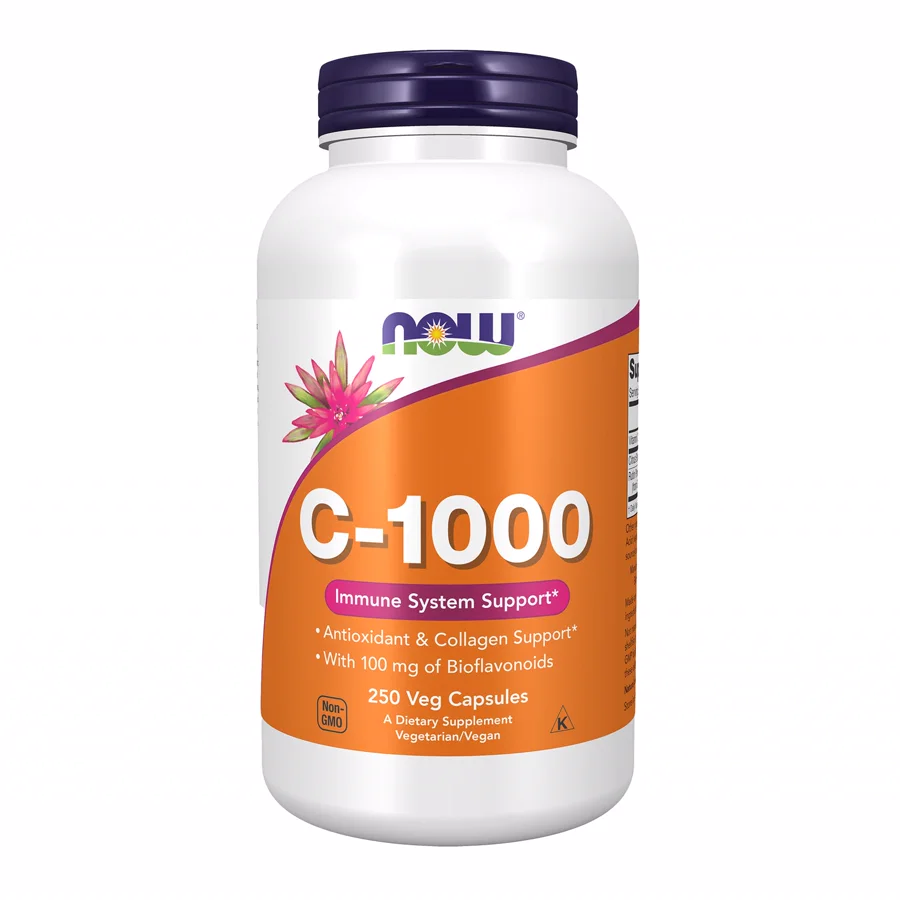
NOW Foods Vitamin C-1000, Veg Capsules
A single-ingredient-forward vitamin C capsule from a long-established, employee-owned supplement manufacturer. One capsule, one clearly disclosed dose, plus a modest citrus bioflavonoid addition — no blend to untangle.
What it's made of
Each vegetarian capsule is labeled as providing 1,000 mg (1 g) of vitamin C as ascorbic acid, plus 100 mg of citrus bioflavonoid complex, a group of plant compounds naturally found alongside vitamin C in citrus fruit and commonly included in vitamin C formulas (their own health effects are less independently established than vitamin C's). The capsule shell is hypromellose (a plant-derived, non-gelatin capsule material), with stearic acid, magnesium stearate, and silicon dioxide as flow agents. The label states the product is non-GMO, kosher, soy-free, dairy-free, egg-free, nut-free, made without gluten, and vegetarian/vegan, and NOW describes its manufacturing as GMP Quality Assured with third-party facility certification.
Per capsule
1,000 mg vitamin C (ascorbic acid) · 100 mg citrus bioflavonoid complex. One capsule per serving.
Label claims
Non-GMO, vegetarian/vegan, soy- and gluten-free. GMP-audited manufacturing with third-party facility certification.
What the real evidence shows
Per the NIH Office of Dietary Supplements, vitamin C is a water-soluble nutrient the body needs to build collagen, support wound healing, and improve the absorption of iron from plant-based foods, and it also functions as an antioxidant that helps protect cells from damage and supports normal immune system function. NIH ODS notes that most people in the US already get adequate vitamin C from food, so a supplement is mainly useful for people whose diet runs low in vitamin C-rich fruits and vegetables, smokers (who have a higher requirement), or anyone specifically advised by a clinician to increase intake — not something with a broadly "more is better" evidence base once basic adequacy is met. Very high intakes can also cause digestive upset in some people, which is worth knowing before taking a full 1,000 mg dose on top of dietary intake.
Who this is and isn't for
This is a reasonable pick for someone who wants a plain, individually-dosed vitamin C capsule from a transparent, well-audited manufacturer, without extra additives or a proprietary blend. It's not a product to double up carelessly with a multivitamin or other vitamin C-containing supplement without doing the math on total daily intake, and anyone with a history of kidney stones should talk to a doctor before taking high-dose vitamin C regularly, since very high long-term intakes have been linked to increased oxalate excretion in some people.
NIH Office of Dietary Supplements, "Vitamin C — Fact Sheet for Consumers"
Product label and supplement facts as disclosed on the manufacturer and retailer listing: nowfoods.com and amazon.com product listing