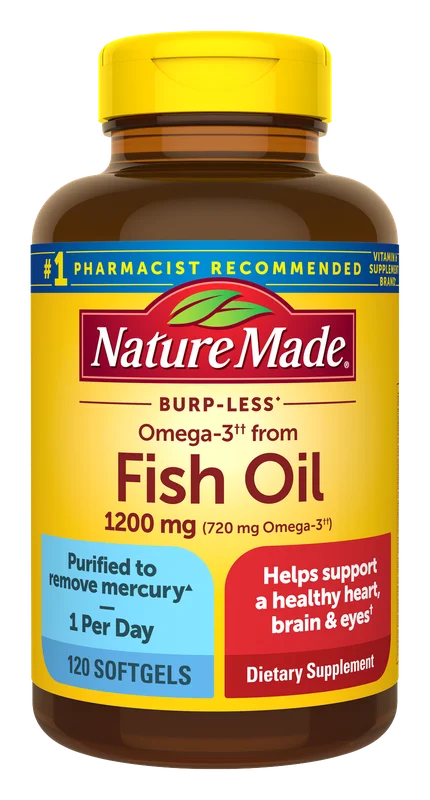
Nature Made Fish Oil Omega-3, 1200 mg Softgels
A one-per-day fish oil softgel from one of the most widely distributed and USP-tested supplement brands in the US. Individually dosed, third-party verified, and disclosed in full on the label — no proprietary blend to decode.
What it's made of
Each softgel is labeled as 1,200 mg of fish oil concentrate providing 360 mg EPA (eicosapentaenoic acid) and 300 mg DHA (docosahexaenoic acid), the two long-chain omega-3 fatty acids most studied in human nutrition. The suggested use on the label is one softgel daily with water and a meal, with a stated maximum of three softgels per day. The product is labeled gluten-free and dairy-free, with no added color or artificial flavor, and is described by the manufacturer as purified to reduce mercury, PCBs, dioxins, and furans — standard processing for mainstream fish oil brands, not a claim unique to this product.
Per softgel
1,200 mg fish oil concentrate · 360 mg EPA · 300 mg DHA. Softgel form, taken with food for absorption.
Verification
USP Verified — an independent, third-party testing program confirming the product contains what the label states, in the stated amount, without harmful levels of contaminants.
What the real evidence shows
Per the National Institutes of Health Office of Dietary Supplements (NIH ODS), EPA and DHA are structural components of cell membranes throughout the body, with especially high concentrations in the retina, brain, and sperm cells, and they play roles in the normal function of the heart, blood vessels, lungs, immune system, and endocrine system. Because of that role, omega-3 supplementation is commonly used to support general heart, brain, and eye health as part of an overall diet — a "supports" framing, not a guarantee. NIH ODS also notes that formal recommended intake amounts (aside from ALA) haven't been established, so there's no single "correct" EPA/DHA dose that applies to everyone; a doctor or registered dietitian is better positioned to say what's appropriate for a specific person, especially anyone on blood thinners, since omega-3s can have a mild blood-thinning effect at higher intakes.
Who this is and isn't for
This is a reasonable, well-documented option for someone who wants a straightforward, individually-dosed EPA/DHA softgel from a widely available, independently verified mainstream brand, and who doesn't get much fatty fish in their regular diet. It's not a substitute for a cardiologist's guidance on managing an existing heart condition, and anyone taking blood thinners or with a fish/shellfish allergy should check with a healthcare provider before starting it — fish oil softgels are processed from fish, and cross-contact with shellfish processing is a realistic concern industry-wide even when a specific product doesn't list shellfish as an ingredient.
NIH Office of Dietary Supplements, "Omega-3 Fatty Acids — Fact Sheet for Consumers"
Product label and supplement facts as disclosed on the manufacturer and retailer listing: naturemade.com and amazon.com product listing